
The Gut-Joint Axis
Mar 04, 2026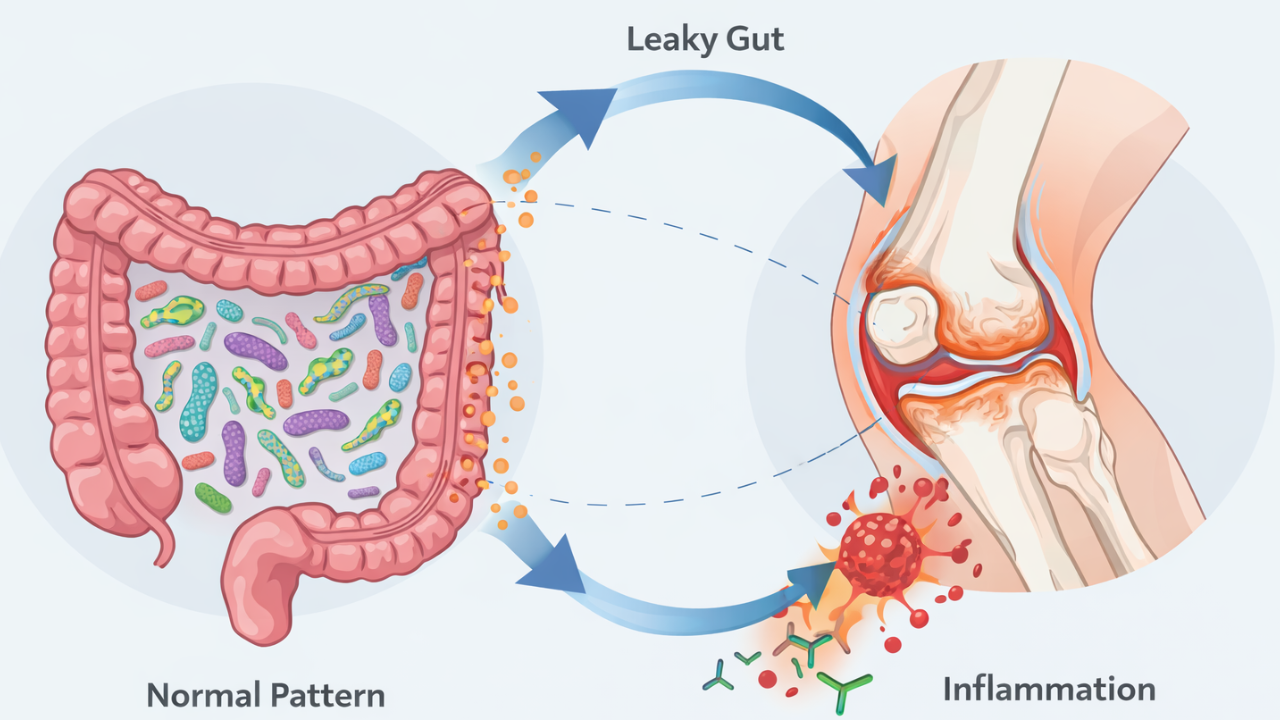
The Gut-Joint Axis
Hippocrates said that all disease begins in the gut. Turns out he was right. Modern medicine is revealing what ancient traditions always suspected: your gut and your joints are deeply connected. This bidirectional relationship, known as the gut-joint axis, links the microbiome, immune system, and inflammation in ways that profoundly affect joint health, recovery, and even how you age.
The gut-joint axis is the communication network between your gut bacteria, immune responses, and joint tissues. The intestinal barrier acts like a filter and messenger, allowing nutrients in while blocking inflammatory substances. When that barrier weakens or the gut microbiome becomes unbalanced, the immune system can turn hyperactive, sending inflammatory messengers that affect distant organs like the knees, hips, and spine.
Research confirms that changes in gut bacteria occur in people with rheumatoid arthritis (RA), psoriatic arthritis, osteoarthritis, and even athletic overuse inflammation. The gut doesn’t just respond to inflammation, it can start it.
How Gut Imbalances Trigger Joint Problems
1. Leaky Gut Syndrome
When the intestinal lining becomes permeable (from stress, processed food, antibiotics, or alcohol), bacterial toxins known as LPS (lipopolysaccharides) can leak into the bloodstream. The immune system mounts a defense, releasing cytokines that promote body‑wide inflammation, including in the joints.
2. Dysbiosis
A healthy microbiome contains abundant Lactobacillus, Bifidobacterium, and Faecalibacterium prausnitzii. These species produce short‑chain fatty acids (SCFAs) like butyrate that keep inflammation low. When those species decline and opportunistic microbes rise, SCFA production drops and inflammation and oxidative stress rise, and arthritic pain worsens.
3. Molecular Mimicry
Certain bacterial proteins structurally resemble human joint tissue. The immune system, tricked by this similarity, attacks both microbes and the host. This is a mechanism suspected in autoimmune arthritis.
Common Signs Your Gut May Be Impacting Your Joints
- Joints ache or feel inflamed even without injury.
- You experience bloating, food sensitivities, or alternating constipation and loose stools.
- Energy dips or brain fog accompany flare‑ups.
- Frequent use of NSAIDs, PPIs, or antibiotics has worsened digestion or inflammation.
- Labs show elevated CRP or autoimmune markers with unexplained pain.
How to Support Joint Health Through the Gut
1. Feed Beneficial Flora
- Include prebiotic fibers: onions, garlic, asparagus, leeks, oats, and cooked‑then‑cooled potatoes.
- Add fermented foods: plain yogurt, kefir, sauerkraut, kimchi, miso, or kombucha.
2. Fight Inflammation Naturally
- Omega‑3s from wild salmon, sardines, and algae oil suppress inflammatory prostaglandins.
- Polyphenols in berries, green tea, turmeric, and olive oil reduce oxidative damage.
3. Heal the Gut Lining
- Mucosal nutrients such as L‑glutamine, zinc carnosine, aloe vera, and collagen peptides (if tolerated) can be helpful.
- Avoid chronic alcohol use, artificial sweeteners, and emulsifiers that damage mucosa.
4. Rebuild Microbial Balance
- Consider probiotic blends including Bifidobacterium longum, Lactobacillus plantarum, and Saccharomyces boulardii.
- Tailor probiotic strategy if autoimmune disease or SIBO is present and target diversity, not just total dose.
5. Rebalance Lifestyle Inputs
- Sleep 7-8 hours nightly. The microbiome resets during rest.
- Move daily. Exercise boosts SCFA production and reduces stiffness.
- Manage stress with breathwork, yoga, or meditation to preserve gut barrier integrity.
|
Category |
Examples |
Key Benefits |
|
Probiotics |
Multi‑strain Lactobacillus + Bifidobacterium, S. boulardii |
Restore balance, support SCFA production |
|
Prebiotics |
PHGG, inulin, resistant starch |
Feed beneficial microbes |
|
Omega‑3s |
Fish oil or algae oil |
Decrease cytokine activity and joint pain |
|
Anti‑inflammatory phytonutrients |
Curcumin, quercetin, resveratrol |
Modulate NF‑κB signaling |
|
Gut repair nutrients |
L‑glutamine, zinc carnosine, collagen |
Strengthen barrier, reduce immune reactivity |
If you want insights on your gut health, one of the best tests you can do is the GI Map. Find out more about it here.